Arizona
Grand Canyon
A mile deep, ten miles wide, two billion years in the making
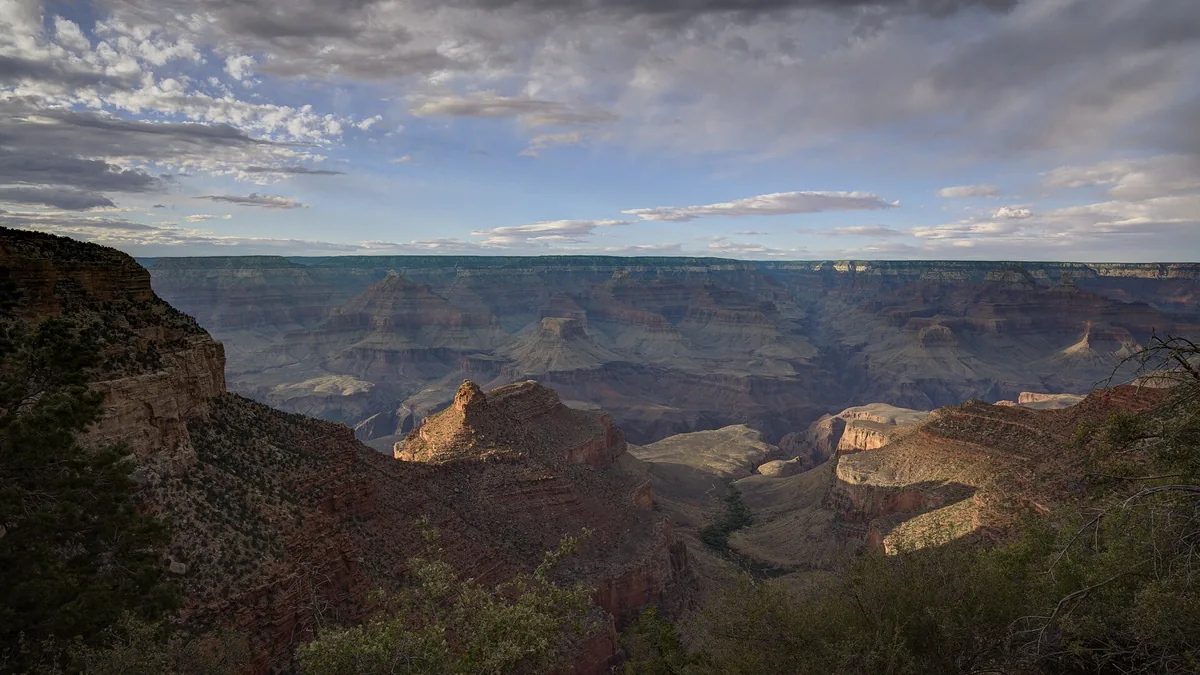
Photo: John Kees · CC BY-SA 4.0
The most famous hole in the world, and still the most overwhelming: a gorge so long and deep that your eyes take a full minute to adjust to its scale.
Reading a canyon like a calendar
At the South Rim you are looking at layer after layer of sedimentary rock laid down between roughly 200 million and 1.8 billion years ago, then carved by the Colorado River and its tributaries over the last five to six million years. The bands of red, ochre and pale limestone are not just beautiful, they are the exposed chapters of North America's geological history.
The rim is the postcard, the inner canyon is the story
Ninety-nine per cent of visitors never descend below the rim. The Bright Angel Trail drops 1,400 metres to the river and back, and should be treated as a serious day hike or, better, an overnight below the rim. Even a short descent to the 1.5-mile mark changes the light, the sound and your sense of distance completely.
Two rims, two different trips
The South Rim is open year-round, has the infrastructure and the classic views. The North Rim is quieter, a thousand feet higher and under snow from December to May. Sunrise from Mather Point and sunset from Hopi Point are the reliable set-pieces; if you want solitude, take the Hermit Road shuttle in winter and walk west from Monument Creek.
Three things not to miss
- Sunrise from Mather Point, before the shuttle buses start
- The descent to Ooh Aah Point on the South Kaibab Trail
- Stargazing on a certified International Dark Sky Park rim
In pictures
Every photo in this guide is freely licensed, credited, and available at full resolution from Wikimedia Commons.
Nearby in the atlas