Campania
Amalfi Coast
A road, a cliff and a series of towns stacked above the sea
Photo: Bernard Gagnon · CC BY 4.0
Fifty kilometres of coastline south of Naples, where the Lattari mountains fall into the Tyrrhenian Sea and the towns are built into the vertical gaps between them.
The road is the landscape
The Strada Statale 163 Amalfitana was built between 1840 and 1853, and it is one of the most dramatic coastal roads in Europe: narrow, corniced into the cliffs, with views down to the sea from almost every bend. It connects Sorrento to Salerno through Positano, Amalfi and Ravello. Driving it is a commitment; the SITA buses do the same route for a few euros, and the ferries are faster and better in summer.
Three towns, three answers
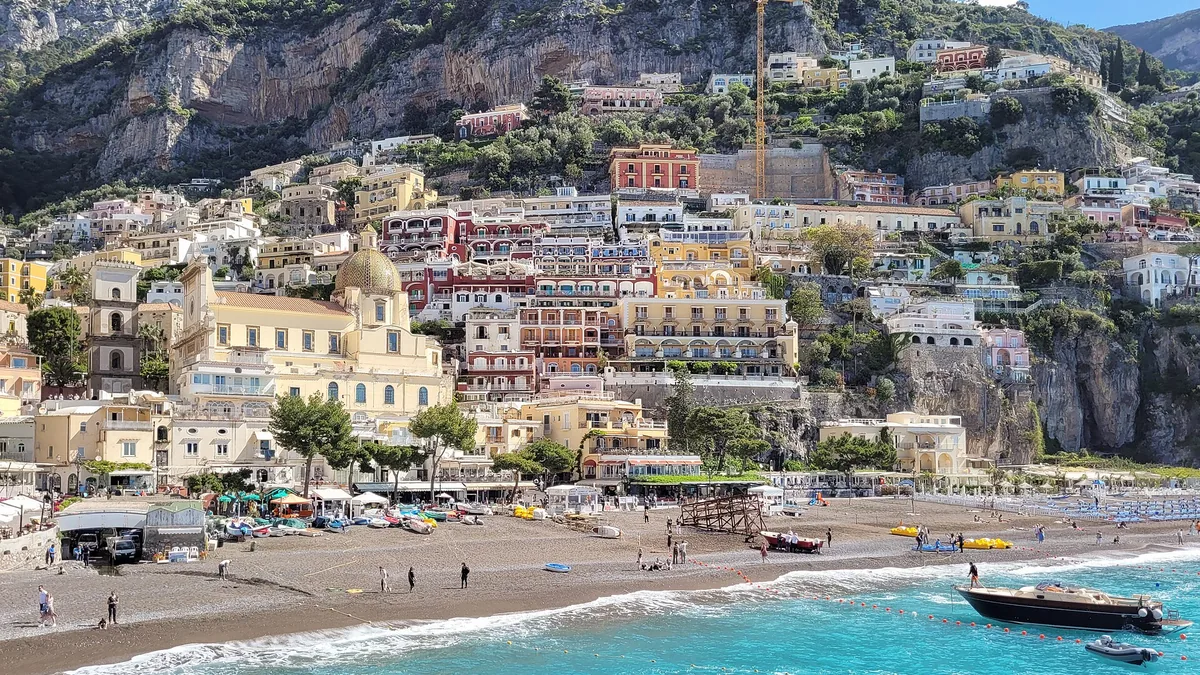
Positano is the amphitheatre: pastel houses stacked above a grey pebble beach. Amalfi is the historic republic, with its 9th-century cathedral and the paper mills in the valley above. Ravello is the quiet one, 350 metres up, with two villas (Rufolo and Cimbrone) whose gardens have views that justify the climb. Furore and Praiano are where the coast is still mostly local.
Walking the coast
The Sentiero degli Dei, the Path of the Gods, runs about 7 kilometres from Bomerano to Nocelle, high above the coast, with views to Capri. It is the single best walk in the region and takes three to four hours. The Valle delle Ferriere, above Amalfi, leads to waterfalls and the old paper mills in a cool, green gorge.
Three things not to miss
- Positano from the coastal road at sunset
- The Path of the Gods above the coastline
- Villa Cimbrone's Terrace of Infinity in Ravello
In pictures
Every photo in this guide is freely licensed, credited, and available at full resolution from Wikimedia Commons.
Nearby in the atlas