Mackenzie Basin
Lake Tekapo
A lake turned turquoise by glacial rock flour
Photo: Michal Klajban · CC BY-SA 4.0
Lake Tekapo gets its colour from suspended rock dust, ground by glaciers, and the surrounding basin is an International Dark Sky Reserve.
The colour has a cause
The Mackenzie Basin's lakes are turquoise because the glaciers above them grind rock into a fine flour that stays suspended in the meltwater. The particles scatter blue and green wavelengths, so the light that reaches your eye is the colour of the water even when the sky is grey. The colour is strongest in spring and early summer, when the glacial melt is highest.
The dark sky
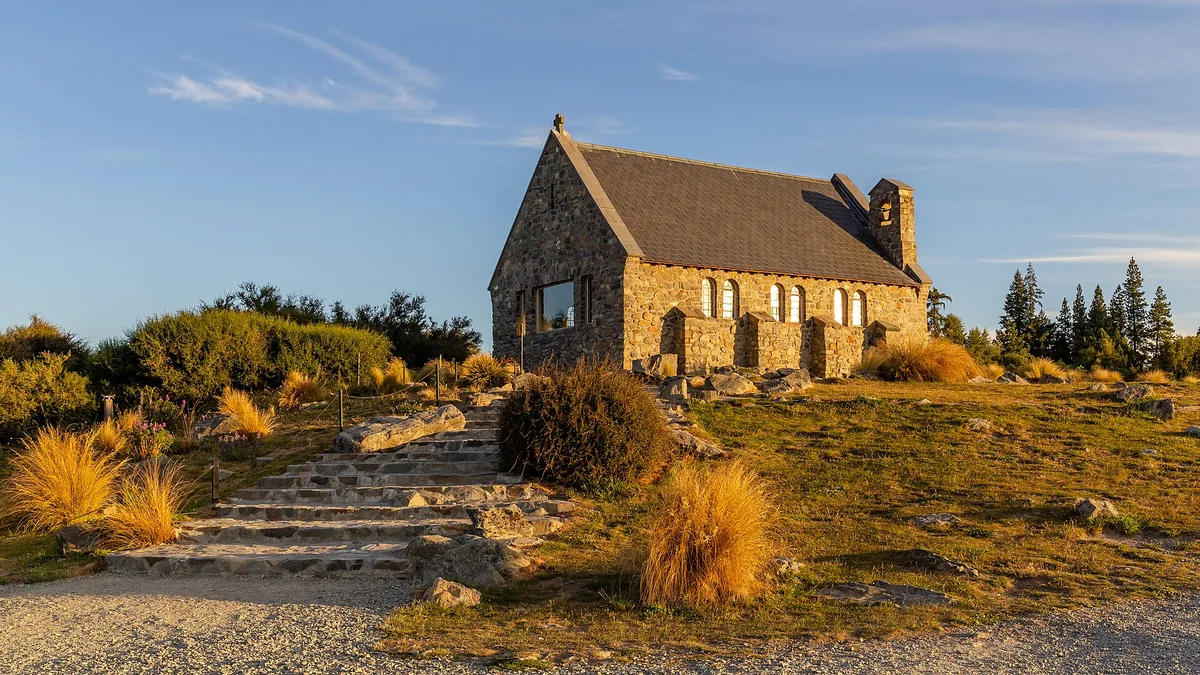
The Aoraki Mackenzie International Dark Sky Reserve covers 4,300 square kilometres and is one of the largest in the world, with lighting controls enforced across the basin. The Church of the Good Shepherd on the lake shore is the classic foreground for astrophotography, and the Mount John Observatory runs night tours with telescope access.
A basin of short walks
Tekapo is the base for Mount Cook National Park, an hour's drive away, with the Hooker Valley Track to the glacier lake and the Mueller Hut route. The lake itself has a hot pools complex, and the peninsula walkway gives a loop over the shore. Twizel, 45 minutes south, has the best access to the basin's other lakes, Pukaki and Ohau.
Three things not to miss
- The Church of the Good Shepherd under the night sky
- The Hooker Valley Track to Mount Cook
- Lake Pukaki's colour with the Aoraki range behind
In pictures
Every photo in this guide is freely licensed, credited, and available at full resolution from Wikimedia Commons.
Nearby in the atlas