Normandy
Mont Saint-Michel
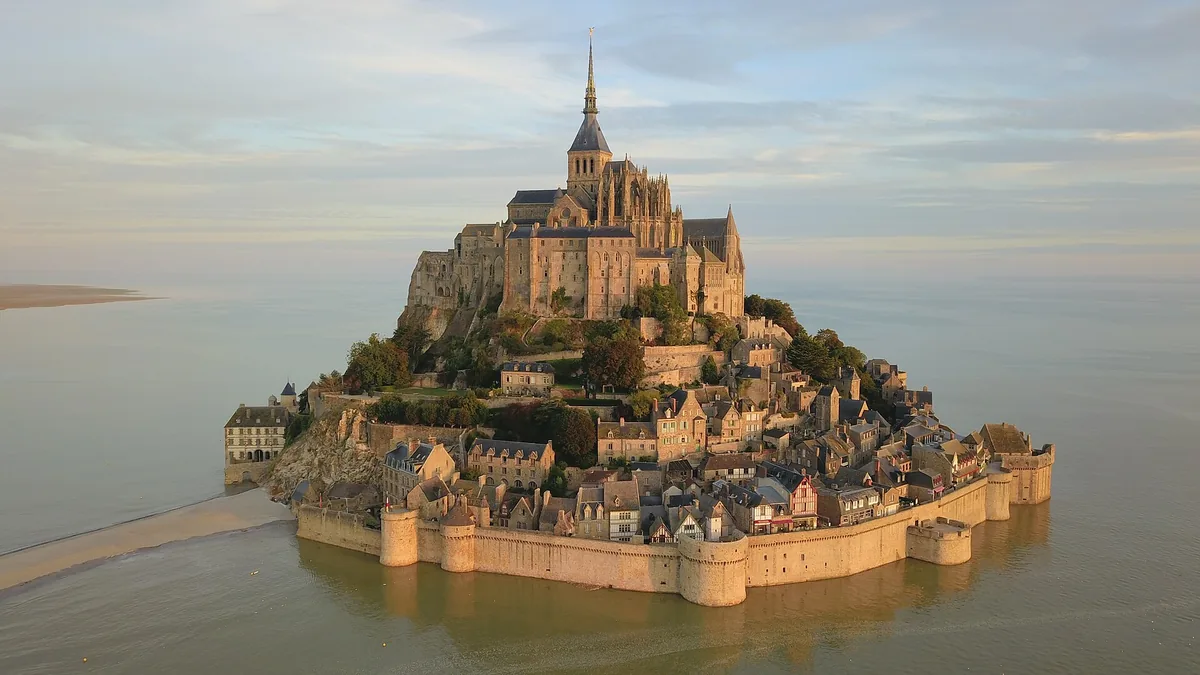
An abbey on a rock, surrounded twice a day by the sea
Photo: Amaustan · CC BY-SA 4.0
A Benedictine abbey built on a granite outcrop in a bay with one of the largest tidal ranges in Europe, connected to the mainland by a causeway that disappears under water.
A medieval vertical city
The abbey was founded in 708 after a vision of the Archangel Michael, and the buildings that climb the rock date mainly from the 11th to 13th centuries. The result is a village stacked in layers below the abbey church, with a defensive wall at the base and the Gothic Merveille, a masterwork of 13th-century architecture, near the top. The whole site is a UNESCO World Heritage property and one of France's most visited monuments outside Paris.
The tide is the story
The bay's tidal range reaches about 14 metres, the water coming in faster than a person can run on the sand flats. Guided crossings of the bay with a licensed guide are the only recommended way to walk the sand, and they are timed to the tide. The new footbridge, opened in 2014, replaced the old causeway so the sea can once again flow around the rock, which is slowly restoring the island character of the site.
Staying overnight
Day-trippers see the abbey between 10 am and 5 pm, which is the worst of it. Staying on the island, or in one of the hotels just outside the walls, gives you the empty streets at dawn and dusk and the abbey in low light. The village has a handful of hotels and restaurants; the rooms are small and old, which is part of the appeal.
Three things not to miss
- The abbey at dusk from the causeway
- A guided low-tide walk across the bay
- The empty village streets before the first buses
In pictures
Every photo in this guide is freely licensed, credited, and available at full resolution from Wikimedia Commons.
Nearby in the atlas